8 Things Top Practicers Do Differently

I read a great article recently that really supports some of my own thinking and experience in practice and playing and what really gets you bang for your practice buck. Or in other words what actually works and what doesn’t. The article references a study undertaken a few years ago at the University of Texas at Austin looking at pianists. Different instrument admittedly, but the same principles most definitely apply.

One of the most important of these 8 things that apparently top practicers do differently that I find works extremely well for m (and used to recommend highly to my students), is not practicing in mistakes. Play something through very slowly, be confident of where you’re placing your left hand and right hand fingers before playing. Even if it means you’re playing reeeeaaaaaaaaallllly sllllllooooooooooooooowwwwwly. Much better this way, that encourages the correct learning of a phrase or piece, with the correct physiology, building the correct habit, than literally practicing in a incorrect movement and then doing the work all over again to unpick it and learn it correctly.

Yes, it may not sound so fluid initially, but stopping and just taking the time to make sense of what you’re doing and how you’re doing it will pay musical dividends in the long run. I promise you.

It also has a couple of interesting concepts that I had been thinking about too recently, including does aiming to play with ‘feeling’ right away assist in the learning? My instinct in has been yes for some time, and there seems to be something to it according to this study referenced by the article. My figuring is that you’re not only using your practice to build in a physiological habit, but also a musical one, and getting to know the music itself not just the fingering. That can only strengthen ones learning of a piece in my opinion.
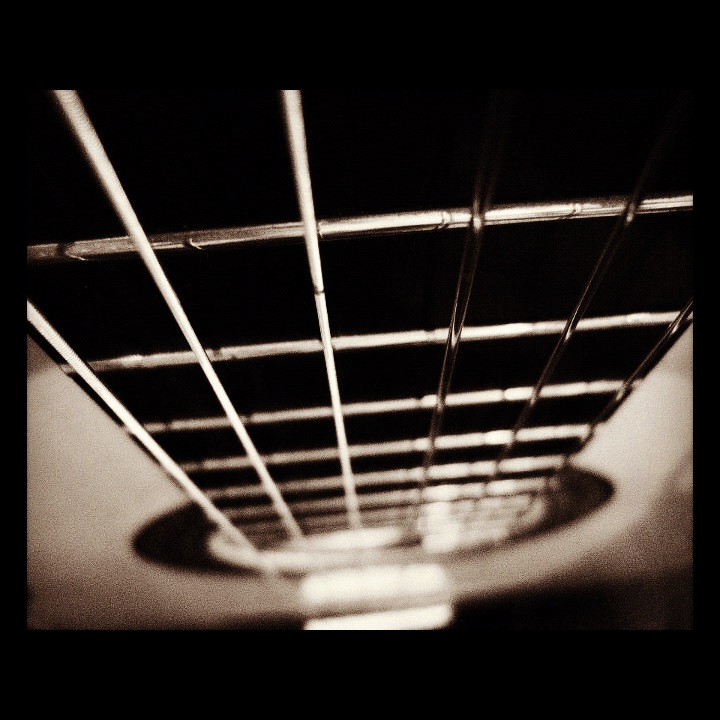
Classical Guitar

So here are the 8 things that top practicers do differently:

1. Playing was hands-together early in practice (OK this is quite a piano-based one, but in applying this to the guitar think knowing what fingering you’re using for both left and right hands, not just your fingerboard hand)

2. Practice was with inflection early on; the initial conceptualization of the music was with inflection. (See!!)

3. Practice was thoughtful, as evidenced by silent pauses while looking at the music, singing/humming, making notes on the page, or expressing verbal “ah-ha”s. (i.e. don’t just go through the motions – 10 minutes of thoughtful, focussed practice is worth way more than 30 minutes of just going through motions)

4. Errors were preempted by stopping in anticipation of mistakes. (Stop playing those mistakes in every time!)

5. Errors were addressed immediately when they appeared. (And again stop playing those mistakes in every time!)

6. The precise location and source of each error was identified accurately, rehearsed, and corrected. (Shall I say it one more time?!)

7. Tempo of individual performance trials was varied systematically; logically understandable changes in tempo occurred between trials (e.g. slowed things down to get tricky sections correct).

8. Target passages were repeated until the error was corrected and the passage was stabilized, as evidenced by the error’s absence in subsequent trials.

To read the whole article, and I strongly encourage you to do so particularly for the top three practice strategies and one strategy to rule them all, head along to:  http://www.creativitypost.com/psychology/8_things_top_practicers_do_differently

Interview with Canberran Classical Guitarist Extraordinaire Minh Le Hoang – Part 3

Well hello folks! Today I have for you the third and final part of my interview with Canberra Classical Guitarist extraordinaire, the wonderful Minh Le Hoang.

Minh Le Hoang

If you happen to be in or around Melbourne this weekend, be sure to head along to St Mary’s Church, 430 Queensbury Street, Melbourne to check Minh out live in concert on Saturday 9th May at 7pm. Grab your tickets now online and save yourself $5 on the door price!

On with the final part of the interview…..

What’s your favourite repertoire to play?

I like a bit of everything, so I’m not specializing at all – more baroque, or more classical. I do a bit of everything!

When I record a solo record you can see it’s a mixed bag of everything I like – it’s Latin, it’s Spanish. I do like Bach. I like my classical repertoire as well, like Giuliani, Sor, Aguado and so on.

The last couple of years my interest has been with some of the classical repertoire. There are a lot more unknown works, like Russian seven string guitar. It’s kind of new to a lot of people, but the music is very well written and it’s very nice. That’s my next project – I’m going to pull out my 19th century guitar and learn a few more of those.

What music do you enjoy listening to?

A listen to a mix, like jazz, pop – good pop. I used to like a bit of the old Police. I still like a bit of that sort of thing. I like the Gypsy Kings, a little bit of rhumba. A bit of Cuban stuff, some tango. Vietnamese music even. The traditional music is quite interesting.

You don’t listen to Schoenberg you know?! Every now and then maybe….

I try and not listen to guitar music so much though. I don’t know why. When you’re a student you’re like “check out this recording” or “check out this player”. A lot of the recordings are so boring though! I’d rather listen to a decent piano recording, or a well-known player playing some cello suites you know?

I think actually learning pop guitar gave me a sort of advantage, going around the finger, getting around the fingerboard better. Some classical players they start in a particular style and that’s all they do. They’re not so fluent. The pop background is very good for a young player. From my experience the ones with the most efficient technique, from an early age, are those doing pop first. Interesting.

Were there any guitarists growing up that you looked to as a source of inspiration?

When we came here I taught myself for a couple of years, I didn’t have any connection with the school of music or anyone. So one of my main inspirations was just listening to John Williams on a cassette. And I still do every now and then for a source of inspiration.

Of course when I got to the school of music I met some of the older guys in the degree, my peers. Antony Field was around at the time, and we were like “hey Antony show us how to do this!” He’s a fantastic player. He’s one of the guys we used to look up to. And of course we had great teachers in Canberra too with Tim (Kain) and Carolyn (Kidd) who I first learnt with.

Are there any guitarists who inspire you in particular at the moment?

Oooh, there are a couple of really good players, I like they’re playing a lot. In the newer generation there’s Ricardo Gallén, something he does is pretty amazing. Adriano del Sal, a beautiful player.

In the older generation there’s Roberto Aussel, he’s one of the most colourful players you can think of. Really beautiful. Everything is so musical, you don’t think of his technique.

There are more players that I like of course.

And when you’re not playing or practicing what do you like to do in your down time?

In the last couple of years I spend more time down at the lake than in the practice room! I like to go fishing a lot!

I really enjoy fishing, and I do it whenever I can. I head down with my rod maybe three or four times a week. There’s something about the bells, and the way the rod bends. It excites me a lot!

It’s good to get away from work, a bit of stress relief!

What’s coming up for you in the next 12 months?

After this solo gig in Melbourne, I’ll be recording with Guitar Trek in July which we have been rehearsing for every weekend for the last month or so with Matt, Bradley and Tim. So that’s in July, and we’ll try and get it out as soon as possible. We’ll get it produced and we’re thinking around the label we want to get on. We should be signing.

Then we’re going to launch the CD in October. There’s going to be two concerts in October with the quartet, and I might be planning to do a few more solo gigs and get some more repertoire learnt. And a lot of teaching.

And of course I might go to Vietnam again at the end of the year, with a couple of solo gigs lined up. So that’s all for now! Keeping me very busy!