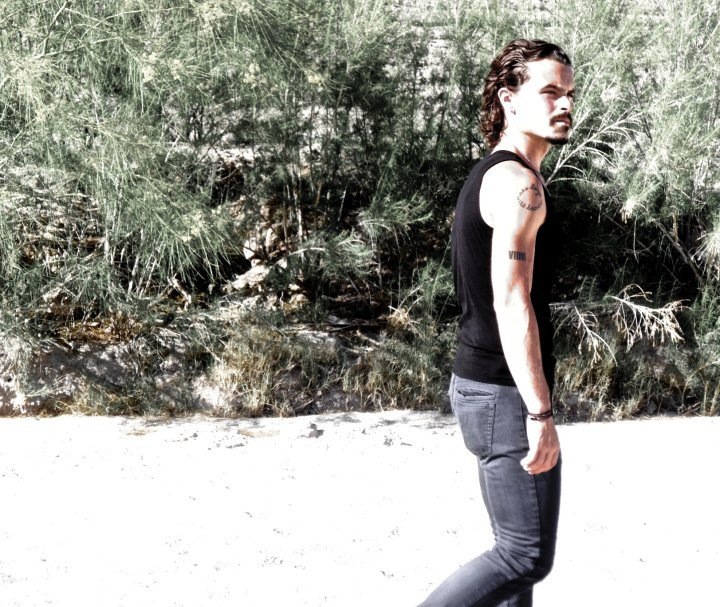
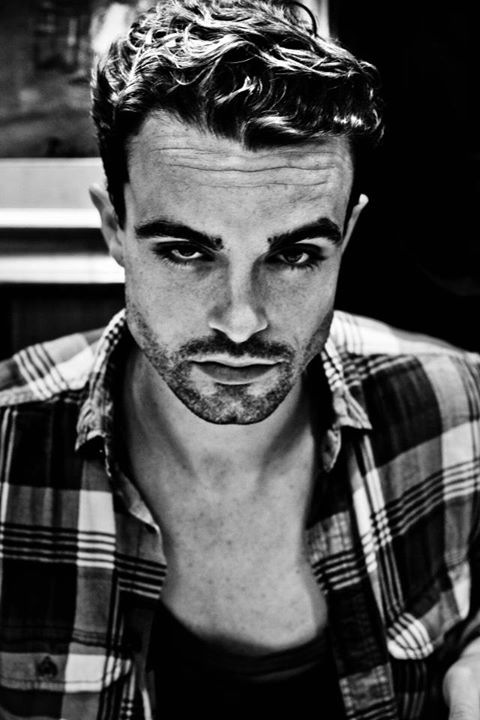
UK Classical Guitarist Jonathan Prag at the Adelaide Fringe

Jonathan Prag had a busy year in 2013, touring the UK, before returning to the Edinburgh Fringe and the atmospheric C Too (church) venue at St Columba’s by the Castle. He has set his sights on the wider world this year however, and for the first time will appear at the Adelaide Fringe.

Jonathan is known for taking his audience on a journey through some of the world’s most beautiful music. In this programme, two Scottish folk songs get the classical guitar treatment and we hear Bach, Lauro, Satie and Gershwin. This is a friendly performer who sets the audience at ease by his ability to provide just the right linking comments.

Jonathan juggles a demanding guitar teaching schedule with performing. He plays in hospitals and hospices all over the UK for the charity Music in Hospitals, working both as a soloist and in the Ruskin Ensemble violin and guitar duo. His calendar for 2014 also includes a stint at the Toronto Fringe in July before once again returning to Edinburgh.

Jonathan Prag
Jonathan Prag

Jonathan Prag will be giving an Adelaide Fringe debut to works by two contemporary British composers for the guitar; Vincent Lindsay-Clark and Matthew Sear, both eminent classical guitarists, have given their blessing for Jonathan to bring their music to the Fringe audience. Lindsay-Clark’s piece, ‘Salsa Roja’ is a brilliant tour de force and was specially commissioned by the world famous Paraguayan classical guitarist Berta Roja. The piece if fiendishly difficult and technically demanding. No less dynamic and exhilarating is ‘America’ by Matthew Sear –in which America – from the Big Apple to the Keystone Cops; honking traffic to the haunting blues – is evoked in a magical soundscape.

Jonthan will be playing the following shows:

FRI 28th Feb – Migration Museum – 6:00pm 80 mins – 82 Kintore Ave, Adelaide- Adult$18.00 Concession$13.50 Companion Card

SAT 1 Mar – 8:00pm 80 mins – HATs Courthouse Cultural Centre – 4 St Vincent St, Auburn – Adult$18.00 Concession$15.50 FringeBENEFITS$17.00 Companion Card

SUN 2 Mar – 6:00pm 80 mins – Church of the Trinity – 318 Goodwood Rd, Clarence Park – Adult$18.00 BankSA Customer $16.00 – Concession$15.00 FringeBENEFITS$16.00 – Companion Card

FRI 7 Mar – 7:30pm 80 mins – The Singing Gallery – 133 Main Rd, McLaren Vale – Adult$17.00 Concession$15.00 Companion Card

SUN 9 Mar – 6:30pm 60 mins – Ayers House Museum – State Dining Room – 288 North Tce Adelaide – Adult$18.00 Concession$15.00 Companion Card

If you’ve not done so already grab tickets for Jonathan’s show here: http://www.adelaidefringe.com.au/fringetix/classical-guitar-jonathan-prag/4bf5241f-fc16-4339-b5cb-36e446601de6

And now for a Q&A with the man himself!

To give you a taste of what’s in store, and some words of wisdom, Jonathan kindly agreed to the famous Classical Guitar n Stuff Q&A! Lucky us!

Welcome to Australia! It’s great to have more talent such as yourself visiting our shores. What program are you going to be playing at the Adelaide Fringe?

Thank you for the warm welcome. My program is going to be a Prelude by George Gershwin (written originally for piano), then Bach’s Prelude from the Cello Suite No. 1, which, many years ago, I used to play on the viola; then on to one of the contemporary composers I’m playing – Vincent Lindsey-Clark. I’m playing ‘Salsa Roja’ from his ‘Fiesta Americana’ Suite which Berta Rojas commissioned him to write for her. There was a wonderful occasion last year when she came to the UK and performed the suite for the first time in the church in Vincent’s home town of Whitchurch in Hampshire, not far from Southampton, where I’m from. Next I play ‘Niel Gow’s Shadow’ which is an arrangement by the guitarist Neil Smith of 4 traditional Scottish tunes; then it’s ‘Lipa Vekovaya’ by Serge Rudnev. I really like the Russian-ness of that piece. It’s very moving. After that it is Matthew Sear’s piece – ‘America’. Matthew is a young guitarist and composer from London and this piece is full of exuberance and paints a vivid soundscape full of his impressions of the America of the imagination. He wrote it after his second visit to the States because his second visit captured his imagination and he wanted to express that. Then I play ‘Gnossienne’ by Satie –then I finish with ‘Tryptico byAntonio Lauro. That’s the basic program, and there might be one of two additions depending on whether I’m playing with an interval or not. So at some venues I’ll probably be adding in a mal Waldron Blues called ‘Left Alone’, ‘Asturias’ by Isaac Albeniz and ‘Herencia Latina’ by Paco Peňa. I like a bit of flamenco!

What was the inspiration for your program?

I’m inspired by all the different moods that the guitar can capture and express and I also love the way that folk music has formed the basis of many pieces in the repertoire. Antonio Lauro, for example, was inspired by the traditional folk tunes of Venezuela and Serge Rudnev has based ‘Lipa Vekovaya’ around a traditional Russian folk song. The Scottish pieces are another example and flamenco is a folk tradition also. But if I was to say what my biggest inspiration was it would have to be J.S. Bach. It was his music, which at first I played on the viola, that made me want to play the guitar. I never perform a concert without playing something by Bach. I never practice without including a piece by Bach and I love listening to all Bach’s music. Although I love other composers – Schubert, Beethoven, Bela Bartok (I could go on for a long time here!) I think you could say that I am a musician because of Bach.

Are you playing anywhere else whilst you’re here in Australia?

No, just in Adelaide this time although I’d love to visit other parts of Australia.

What else are you working on at the moment and what can we expect to see and hear next from you?

I’m preparing another piece by Vincent Lindsey-Clark and I’m working with Matthew Sear again also. I hope that I’ll be doing some duos soon but watch this space. I started out in a duo with the guitarist Adrian Neville and I really enjoyed working with him. Then I went solo and Adrian became a distinguished teacher at Winchester College and I was too busy to get into another duo although I do still play with The Ruskin Ensemble, usually as a cello, violin and guitar trio. But I miss playing in a duo.

As a musician, what music excites you the most and why?

Well I’ve already admitted that Bach is my ultimate constant inspiration but there certainly are other kinds of music that I get very excited by. South American music – I’m playing Lauro this time but if I wasn’t I’d be playing Barrios or Piazzolla. I’m interested in exploring the possibilities of improvisation although jazz guitar has never been something I’ve felt qualified to play. I did play guitar for a couple of years in a cumbia band –and helped on vocals. South American music again. It was great fun and really invigorating. I also really like early Fleetwood Mac and Creedence Clearwater Revival – oh and Bob Dylan. I’d better stop or I could be here for a while!

Which guitarists do you find the most exciting and inspiring?

I can still remember the first time I heard the recording of Segovia playing the Bach ‘Chaconne’ – that was it – I was hooked. I like Julian Bream for the sound he produces and the Lute recordings of Bach he did. I like the way Carlos Bonell plays, and David Russell. Berta Rojas is wonderful of course and Paco de Lucia– there are so many amazing guitarists. And he isn’t a classical guitarist but I really like Richard Thompson. This is a hard question!

When you’re not practicing and playing what activities do you get up to?

I play squash – in fact I’ve already been in touch with the South Adelaide Squash Centre to fix up a game or two while I’m here – I like cycling, going to the theatre and listening to music. I love going to football or rugby matches with the family. We have four grown up children so it’s a very jolly occasion when we all get together on one of those excursions. I love travelling and seeing the world and sampling good food… all the things most people like really.

What top tips can you offer folks who are learning or thinking of learning the classical guitar?

Well, definitely to take your time – there’s no forcing it. If you can do something on the guitar slowly, even if there is a 10 second pause between each note, then one day, by doing it slowly, you will also be able to do it fast. You need patience. The other thing is to enjoy the music – I mean by that to listen carefully to what you play – each note. Hear and enjoy the music in the way each note combines with the others, as you play them. By enjoying the music at each stage of your progress you gain motivation to keep going. It shouldn’t be some kind of torture you put yourself through. There’s no virtue in making yourself suffer.


Wise words indeed Jonthan – thanks! And all the best of luck for Adelaide. Enjoy!

You can check out Jonathan’s blog at:  www.JonathanPragClassicalGuitar.blogspot.com

New Album Review: Bryan Baker – The Lacuna Variations and a Q&A with the Man Himself!

Bryan Baker is the kind of artist that I really admire – the music, good music, comes above all else. The boundaries of genre are no boundaries at all, merely marker posts into a slightly different fork in the road. Bryan Baker is the kind of guitarist that I really admire too – equally at ease rocking out on the electric axe as he is with noodling on some Bach-inspired fugue on his nylon string classical guitar. He cross-fertilises, references and draws inspiration from all manner of styles in his evidently virtuosic playing and mature and progressive musical writing.Bryan Baker

If you’re not aware of Bryan Baker, he has been building up a loyal and ever-growing fan base over the last fourteen years gradually, playing and eclectic blend of jazz and improvisational arts, electronic sensibilities and production techniques, classical composition, rock, blues, and innumerable other influences.

Baker’s latest album, which is his fifth solo outing, is his first foray into the world of writing for classical guitar. But don’t think for one minute that this is some lame-ass crossover album – it ain’t. Baker has quite clear command of the idiosyncrasies of the classical guitar and how to write well thought out, yet expressive contemporary music with well-developed, passion imbued musical ideas.

In listening to the eight variations making up The Lacuna Variations I was often reminded of the work of Leo Brouwer (the start of Three is very reminiscent of Cuban Landscapes with Rain) and Toru Takemitsu (the whole thing had a bit of a In The Woods vibe for me). For me, this is the very sort of writing I love (and would love to hear more of) for the contemporary classical guitar.

The Lacuna Variations was composed by Bryan on a two year sabbatical in Seville, Spain and throughout Italy for the past two years where he was working and performing with various artists. The album is clearly has many musical influences and inspirations, from Bartok, Messien and Shostakovich to Bach, Chopin and Steve Reich, while simultaneously employing Bryan’s own inimitable styling.

The pure sound of Baker’s guitar is joined in some of the variations by the introduction of effects such as delays (a la Nigel Westlake’s Hinchinbrook Riffs) and loops. These effects are not really effects though per se – they are not covering up, or “adding a cherry on top” of the music, they are brought in to add to, to add another layer on top of and to vary the musical material in rather interesting ways. A great use of the guitar with contemporary music technologies to benefit the music, it’s “feel” and musical direction.

My favourite of the eight variations is Three. This is one of the longest of the variations and winds it’s way on a fantastic auditory journey, starting out very simply with a gentle, pulsing one note repetition. This builds into some delightfully angular sounding arpeggios, before moving into a faster jazzy, Spanish-inflected quasi-melody, which itself then gives way to a slower more introspective melody and Bach-esque, jazz-infused exploration. I really like Bryan’s use of colour and dynamics in this variation too. He’s not not afraid to give the guitar a bit of welly when required, but is equally at home with the lightest and deftest of touch in response.

The album is due for release around mid-December (watch this space for further details) and I highly recommend it if you want to listen to some of the most interesting contemporary classical guitar writing and performance.

My rating: 9/10

And That’s Not All – Here’s A Q&A With The Man Himself, Bryan Baker!

Yes, folks, Bryan was kind enough to answer a few questions for Classical Guitar n Stuff. How exciting!

You’re about to release your fantastic new classical guitar album “The Lacuna Variations” – what was the inspiration for coming up with the album? Who or what are you main influences in your writing?

My inspiration was largely based in a desire to, for lack of a better term, “reconnect” with the foundations and roots of my instrument. Having spent the large majority of the past 7 years progressively stacking more processing, power, energy and volume into my music, I felt an almost existential need to strip away each and every element clogging the pure connection with my guitar, something I felt that I had lost to a certain extent. The raw, poetic simplicity of the classical guitar was the first inspiration that came to me, and one that also allowed me to reconnect with my roots, having begun my musical career playing classical music as a child.

In terms of inspiration, guitaristically, Villa-Lobos has always been central to my music, as well as Julian Bream, and the music featured on this album is no exception. Outside of the realm of guitar, Shostakovich was a major beacon of inspiration, as well as Satie.

Bryan BakerCan you tell us a bit about the recording process? Did you enjoy it? What were you favourite parts of the process? And the least favourite? How long did it take you all up?

The recording process was a rather lengthy one, as I’ve always felt classical guitar albums, or any solo guitar recording for that matter, are so indicative of a moment, an emotion, a mood, that it can tend to take multiple days or weeks to find “that” recording that rises above all others. With this concept in mind, we recorded each song on the album individually until I was completely satisfied with a particular version, then would move on to the next song, with the total recording time taking roughly  6 weeks until I was happy with the overall result. I certainly enjoyed it. I love recording. Unless I’m not playing well, then I hate it! Haha! My least favorite moments are always the same; bad days. They happen, as we’re all human, however they can, and often times do, frustrate the absolute hell out of me! Luckily, this album was almost effortless, as many of the pieces seemed to simply flow with an energy all their own.

What is your favourite track on the album and why?

I’m very partial to “Two”, as it is one of those mysterious, seemingly god-given compositions that came to me while on the Subway, which I then composed in 15 minutes and recorded the same day. I love its simplicity and simultaneous twists and turns, and I love playing it live. It just sits so beautifully on the instrument, allowing each of the guitar’s sonorities and timbres to ring and breathe.

What “lessons learnt” did you take from the process of making the album?

Simple: I need to carry more nail files on me! I was always with a snag and without a file!

The number of times either I or someone was running to the convenience store for nail files was absurd.

Have you written any other work for classical guitar? Any plans to write more for the instrument?

As of yet, no. However, I certainly plan on doing much, much more, as I truly feel I’ve found a connection with this particular application for the guitar that exceeds any of my past.

Addtionally, I feel that the idiom of classical guitar music is a wholly under discovered area of music, and something I see and hear tremendous potential for, both within more traditional settings, as well as outside of them. So, yes. More to come, certainly.

What else are you working on at the moment? What else can we expect to see and hear from Bryan Baker in the next year or so?

My main focus is to perform and tour the music featured on “The Lacuna Variations” as much as humanly possible, wherever, whenever and however, in addition to masterclasses and clinics coinciding with performances. Other than that, I’ll be recording an album of electric/post-rock improvisational music with long-time friend and bassist extraordinaire Giacomo Merega and drummer Paul Kaiser later in the year, as well as an acoustic project in Amsterdam this summer, but this music will remain my main focus.

What music (both to play and to listen to) excites you the most and why?

I devour music of all types constantly. I probably buy roughly 7-10 albums per week from a panoramic range of artists. As of late, I’ve been listening heavily to “The Complete RCA Album Collection” by Julian Bream, “Lost” by Trentemoller, “No Better Time Than Now” by Shigeto, “Leverage Models” by Leverage Models, “Siberia” by Polvo, “Virgins” by Tim Hecker, “Nothing” by Meshhuggah, Jeremy Denk’s recently released version of Bach’s “Goldberg Variations” as well as his album of Beethoven and Ligeti music, “Engravings” by Forest Swords, and honestly many, many others.

Which guitarists do you find the most inspiring or exciting? And other musicians?Bryan Baker

In terms of guitarists, classically speaking, not a soul compares with Julian Bream, in my opinion. I love his playing because it’s imperfect, and that makes it perfect, human, emotive, real. I don’t feel the same response to Parkening, Segovia, Williams and others as I do to Bream.

Non-classically, wow, hmmmmmm… David Tronzo certainly, as well as Marc Ribot. John Shannon is a peer and friend who is also paving new roads on the acoustic guitar (steel string) who happens to live in Australia currently as well.  Ryan Scott is an electric guitarist in NYC who’s very talented. There are simply too many… Haha

Outside of guitarists? Ha! Impossible… Can I say “all of music”? Is that a valid response? Because, in reality, everything does sort of inspire me. I just try to stay as open as possible and let it all in.

When you’re not practicing, playing and writing what do you get up to

I love to cook, and have also studied the culinary arts quite extensively. I have an Italian fiance, so she keeps me on my toes quite effectively in terms of my quality control. Other than that, I love a good book, especially the more philosophically slanted, and generally read a book a week or so. I jog daily, hike, bike, whatever to keep the blood flowing as well.

What are your top tips for someone currently learning or thinking of learning the guitar?

Be yourself. Do not think or do something because it has been told to you. Act based on emotion and instinct, allowing your intellect to inform, but never guide your music. This way, you create “your” music, allowing us all to benefit from your originality and dedication.

Finally, do you have any plans to head Down Under? We’d love to see you here in Australia!

I’d love to come! It’s been too long! Hopefully this album takes me back to Australia. Love it there!