8 Things Top Practicers Do Differently

I read a great article recently that really supports some of my own thinking and experience in practice and playing and what really gets you bang for your practice buck. Or in other words what actually works and what doesn’t. The article references a study undertaken a few years ago at the University of Texas at Austin looking at pianists. Different instrument admittedly, but the same principles most definitely apply.

One of the most important of these 8 things that apparently top practicers do differently that I find works extremely well for m (and used to recommend highly to my students), is not practicing in mistakes. Play something through very slowly, be confident of where you’re placing your left hand and right hand fingers before playing. Even if it means you’re playing reeeeaaaaaaaaallllly sllllllooooooooooooooowwwwwly. Much better this way, that encourages the correct learning of a phrase or piece, with the correct physiology, building the correct habit, than literally practicing in a incorrect movement and then doing the work all over again to unpick it and learn it correctly.

Yes, it may not sound so fluid initially, but stopping and just taking the time to make sense of what you’re doing and how you’re doing it will pay musical dividends in the long run. I promise you.

It also has a couple of interesting concepts that I had been thinking about too recently, including does aiming to play with ‘feeling’ right away assist in the learning? My instinct in has been yes for some time, and there seems to be something to it according to this study referenced by the article. My figuring is that you’re not only using your practice to build in a physiological habit, but also a musical one, and getting to know the music itself not just the fingering. That can only strengthen ones learning of a piece in my opinion.
Classical Guitar

So here are the 8 things that top practicers do differently:

1. Playing was hands-together early in practice (OK this is quite a piano-based one, but in applying this to the guitar think knowing what fingering you’re using for both left and right hands, not just your fingerboard hand)

2. Practice was with inflection early on; the initial conceptualization of the music was with inflection. (See!!)

3. Practice was thoughtful, as evidenced by silent pauses while looking at the music, singing/humming, making notes on the page, or expressing verbal “ah-ha”s. (i.e. don’t just go through the motions – 10 minutes of thoughtful, focussed practice is worth way more than 30 minutes of just going through motions)

4. Errors were preempted by stopping in anticipation of mistakes. (Stop playing those mistakes in every time!)

5. Errors were addressed immediately when they appeared. (And again stop playing those mistakes in every time!)

6. The precise location and source of each error was identified accurately, rehearsed, and corrected. (Shall I say it one more time?!)

7. Tempo of individual performance trials was varied systematically; logically understandable changes in tempo occurred between trials (e.g. slowed things down to get tricky sections correct).

8. Target passages were repeated until the error was corrected and the passage was stabilized, as evidenced by the error’s absence in subsequent trials.

To read the whole article, and I strongly encourage you to do so particularly for the top three practice strategies and one strategy to rule them all, head along to:  http://www.creativitypost.com/psychology/8_things_top_practicers_do_differently
Recording Classical Guitar: Part 2 – Microphone Positioning

Hi folks, following on from the first in a three part guest post from Rick Alexander (here’s the LINK in case you missed it) on how to approach a recording set-up, I have a fabulous post for you from Rick on microphone positioning for optimum sound capture during the recording process.

Over to you Rick!

Recording Classical Guitar: Part 2 – Microphone Positioning

Microphone positioning is one area where recording becomes more of an art than a science.   You do need to experiment in order to get the best results. 

guitar 6

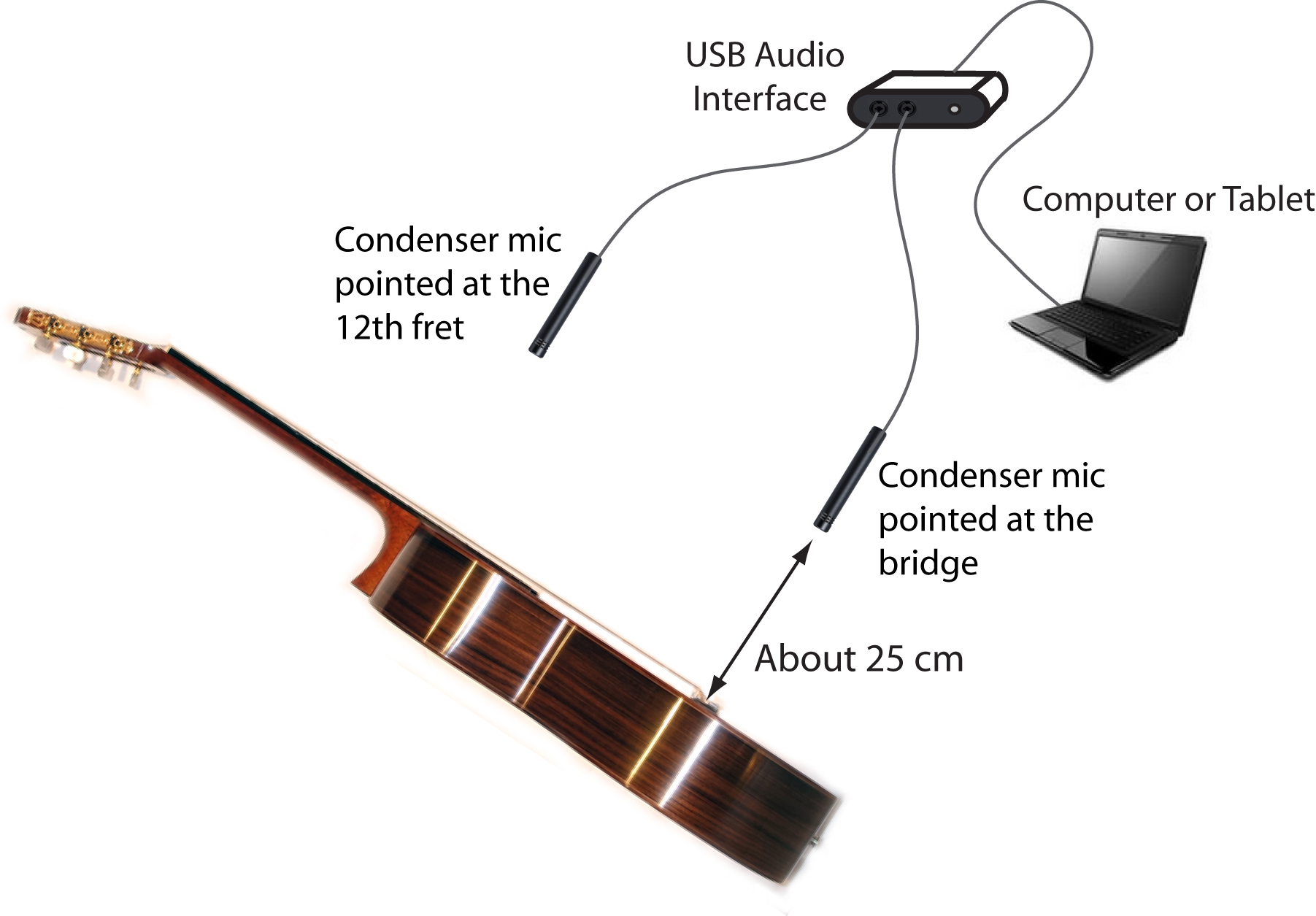
Figure 1 – A mic set up for stereo recording (used for example 1)

Figure 1 above shows a typical setup for stereo recording (see more on stereo vs mono below). Pointing one mic at the bridge, one mic at the 12th fret works well. As noted in part 1, you won’t want the mics too close to the guitar or you’ll get too much bass. I usually have around 25 to 35cm from the mic tip to the guitar. If you have the mics further away you’ll be picking up more and more of the sound reflections from your room’s walls and floor. Unless your room is acoustically optimised you probably don’t want this. Also, an advantage of having the microphones fairly close to the guitar is that this will help the guitar’s sound to outweigh any sound from traffic etc. from outside.

Here is a stereo recording I’ve made with the setup shown in Figure 1.

The microphones I used are Neumann KM184s and the audio interface a MOTU 828 mk3. The guitar is a 1995 Carson Crickmore with a traditionally braced spruce top. The strings are Hannabach high tension Silver Special basses and Carbon trebles (which are fairly bright). The music is the introduction of my piece “Bellbrae” from my CD “Fine Light”. I’ve put the right mic signal, from the listener’s point of view, on the right channel and the left mic on the left channel. (Putting each mic’s signal totally on one channel gives the widest stereo image.) Note that this is a raw recording – I’ve done no adjustment except to adjust the levels of the left and right signals to about the same level and to fade the ending.

Angled mics

I sometimes put the mics perpendicular to the sound board of the guitar as in Figure 1. Alternatively, I angle the mics as in Figure 2, with the mics about 25cm from the guitar. Audio Example 2 is a recording I’ve made with the mics setup as in Figure 2. I prefer the sound of example 2 but the difference isn’t large.

guitar 6

Figure 2 – Angled mic  position for stereo recording (used for example 2)

It’s also worthwhile experimenting with which strings you point at. I usually aim the mic roughly at the 3rd and 4th strings. You don’t need to be too precise but, for example, I think you’d start noticing too much bass if you aimed as far off centre as the 6th string.

If you have a hard wooden floor I’d recommend putting a rug under yourself and the mic stands in order to reduce the guitar sound reflecting from the floor to the mics.

Finally, if you’re recording using a computer I’d suggest setting up so that you can point the back of the mics in the direction of the computer so as to reduce the level of computer noise recorded.

Here’s a good YouTube clip where the presenter demonstrates the effect of changing microphone positions for steel string guitar recording: https://www.youtube.com/watch?v=q2nNXnCBKaw

Mono vs Stereo Recording

You might well ask: why stereo? We only want to record one guitar after all. Also, you’ll often see concert performers only using one mic on their guitar.

But you’ll find that if you record a single guitar in stereo you’ll get a much more realistic sounding result. Especially when listening on headphones. Audio Example 3 here illustrates the difference. The example has a short section of audio in mono then a short section in stereo followed by longer mono and stereo sections. I’ve used the setup in Figure 2 for the stereo section and the mono section is just the right channel from the stereo recording.

I did also try using the bridge mic for this mono example but thought the neck mic sounded better.

Mic Stands

K & M make good quality mic stands. They have a small stand, K&M 25950, which is particularly useful for classical guitar recording. http://www.sweetwater.com/store/detail/KM25950 Using this stand lets you avoid having the large boom of a typical mic stand cluttering up your room.

Audio Interfaces

In the next post I’ll discuss options for the audio interface used to interface the microphones to your computer.