Five Things To Do Before You Sit Down To Practice

I’m always rattling on about good quality practice being one of the keys to progress on the classical guitar and I’ve written previously on what makes for good quality practice. There are also a number of things you can do prior to your session to ensure you’re ready and set-up for making the most of your practice time.

So here, folks, are five things that I find help really set me up for a good practice session:

cropped-2010_09_25_guitars_003-scaled1000.jpg

(1) Prep your nails

Make sure your right hand fingernails are shaped, nick free and playing surfaces are glossed to a high shine. Then they’re ready to make the most beautiful tones for you! Also make sure your left hand (or fretting hand) nails are nice and trimmed down so they don’t catch or dig into the fretboard. It’s kind of annoying and a little disruptive to realise that you need to trim them halfway through an exercise or a piece and then go searching for your nail scissors. Get into the habit of making sure your nails are prepped and ready before your practice session and then you won’t have to think about it during your session.

(2) Know what you want to achieve in this session

This is a big one (and I’ve dedicated a blog post to this subject recently in its own right – Pre-Practice Preparation) – knowing what you want to get out of a session, what you want to overcome, figure out, nut out, play differently, read through etc. is key to maximising your time. Decide what it is you want to do, commit to doing that and you’re halfway there.

(3) Get your music, exercises, sight-reading, metronome, pencil, eraser and whatever other materials you’ll need for your practice right there on the stand or within arm’s reach.

Fluffing around, getting up and down, digging around on a bookshelf or in a bag for music or other bits and bobs can create a distraction and disrupt the creative juices. Because you’ll have thought about what it is you want to do in your practice session as per (2) above, that will help you think about what it is you’ll need to have around you for your practice. Grab a little side table, or another chair, and pop your various bits and bobs there ready for you to access easily.

(4) Grab a glass of water (or a cup of tea if it’s chilly which is what I’m doing in the Melbourne winter at the moment!)

A glass of water is, plain and simply, good for the obvious reasons of staying hydrated and helping maintain your focus.

(5) Tune up!

This is an absolute must. Do not launch into playing without first checking you’re in tune. Whether you do this by ear, digital tuner, via an app on your phone, piano, tuning fork or whatever, make sure you’re in tune. It may not be so obvious to the beginner, but the guitar does out of tune incrediby quickly and so tuning each time you come to play is very important. The more you play and develop, the more sensitive your ear will become to the tuning and will it become second nature. If you don’t do this already, this a very good habit to start to get into.


Happy practicing!
The LMusA Diploma Journey – Update #5 – 3 Months In & Keeping On Keeping On!

Hi Folks, I thought I’d do a bit of an update this week on my LMusA diploma journey, seeing as the last one was a couple of months ago already. How time flies!

For those of you new to the blog (or this wee series I’ve started building) or those that want a recap, I decided to start preparations for taking the LMusA diploma (http://en.wikipedia.org/wiki/Licentiate_in_Music,_Australia) in April this year.

So where are things three months into the journey?

Well, I’ll say from the outset here that I believe I’m really still in the initial stages of this journey. I’m under no illusions as to the complexity of the pieces I’m learning, will be learning and getting to know inside out over the next couple of years. And I’m under no illusions about the level expected of me going into the eventual recital examination. This all sounds very “heavy”, so don’t get me wrong – I’m finding this an overall journey so far most enjoyable and challenging in the most positive ways!

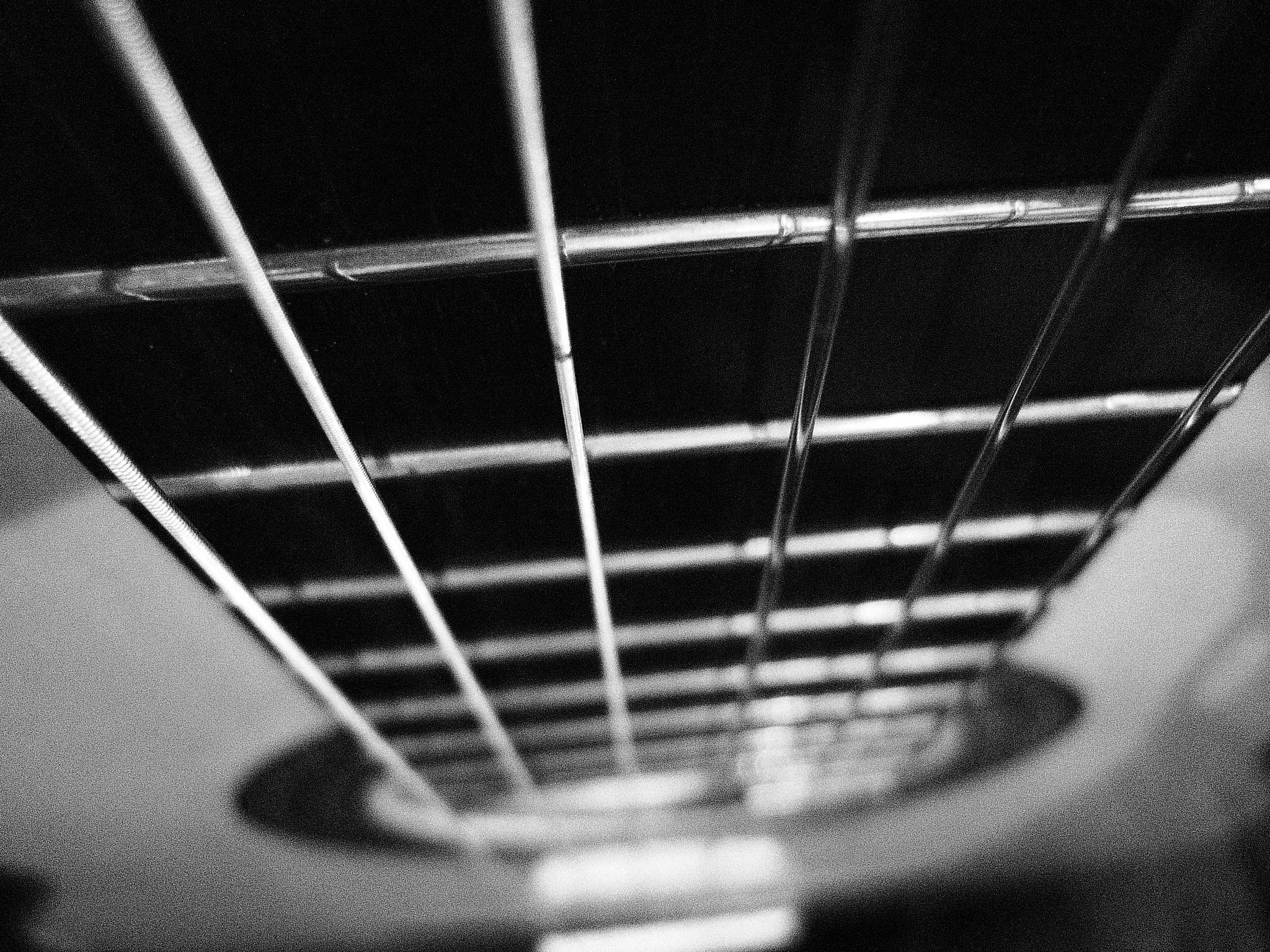
So, yes, I decided to start out with learning an absolute all-time favourite piece of mine – La Maja de Goya by Granados. And three months in I feel it’s coming together really very well indeed. It’s getting that feel of being a whole piece, not just bits of phrases or sections stitched together with some fluffy bits in between. I’m getting a handle on the more technically tricky bars to the point where there are really only three, perhaps four of these throughout the whole piece. I’m also becoming more and more certain about the direction I’d like to take the music and its “feel” (i.e. colours, dynamics etc.).B&W Down Fretboard shot

What are the next steps, over the next three months, with this piece for me?

(a) Continuing working on the tricky bits until they’re under my control.

(b) Continue to play sections, then halves of the piece, and then the whole of the piece at 75% tempo, 90% tempo and 100% tempo to continue cementing it as a whole thing, a whole piece of work with clear direction and intention throughout, that I can play consistently each time I approach it.

(c) Play it for a live, breathing audience – the first airing of a piece is important as it gives you good feedback about what you feel is working well and what needs further work.

(d) Continue playing it more, and developing my thoughts and ideas on approach, energy levels, dynamics, colours and so on.

(e) Continue the memorisation of the piece (which is probably around 80% of the whole at present as a result of studying the piece closely, not just where my hands are moving).

But this is not going to be it for my classical guitar playing workload over the next three months. Oh no, being the glutton for work that I am, I’ve also made a start in the last week on my next  piece to add into the recital program – and this is a biggie – the whole of the Suite Compostelana by Frederic Mompou. The best way, for myself at least, is to really break this down and get stuck into learning it a page or rather a large section at a time.  I’ll keep you updated as to how I go!

—-

For the previous posts in this series head here:

Update #4 – Keeping Going Through the Frustration

Update #3 – Practicing Whilst Travelling

Update #2 – An Example of a Day’s Practice

Update #1 – The LMusA Diploma Journey

The Start of a New Journey – The LMusA Diploma