Practice time!

So how do you set out your practice time?
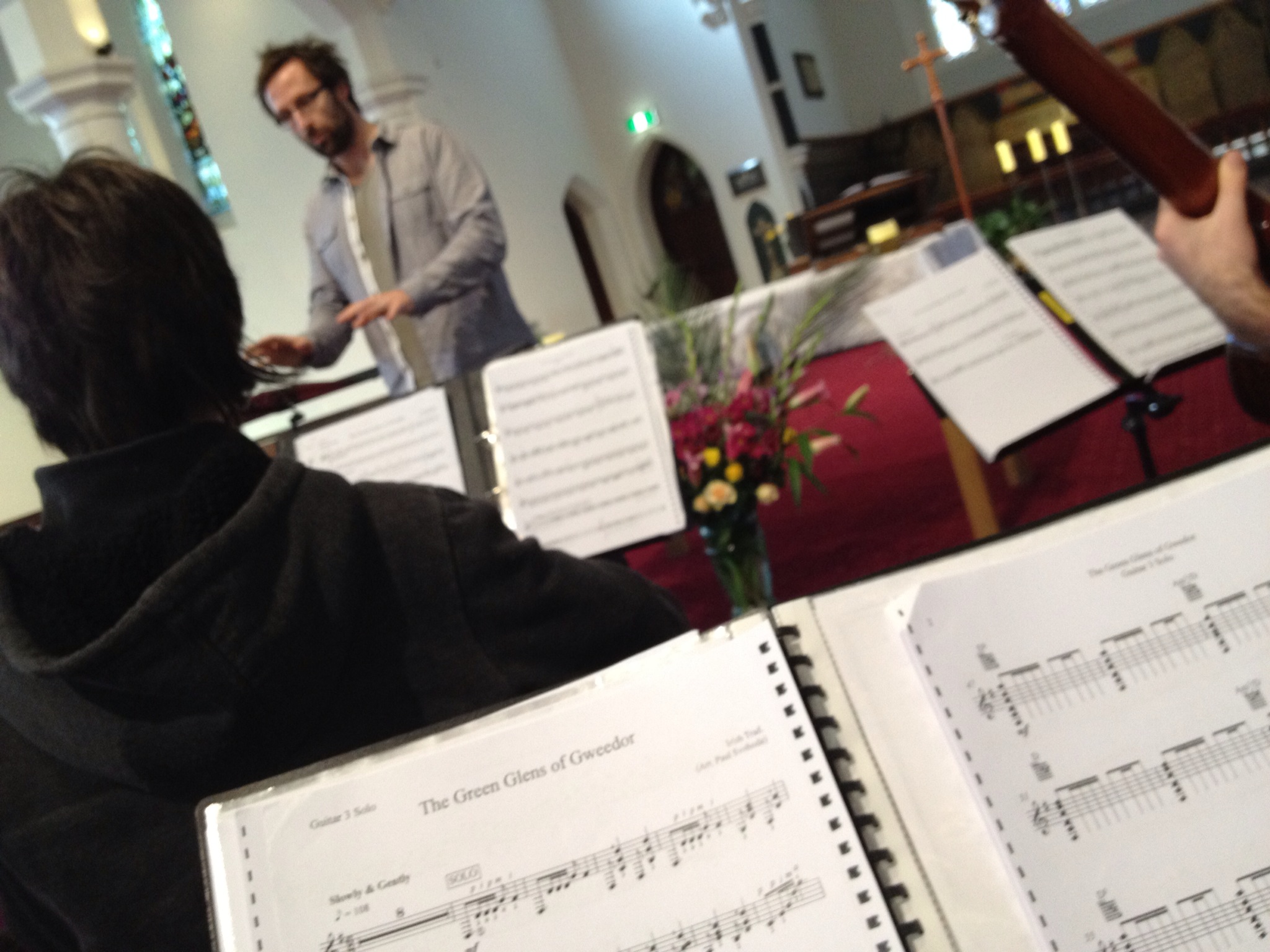
Do you have a set routine that you always stick to?

That’s pretty good if you do. If you can get a habit formed in terms of a regular practice time and practice style then you’re setting yourself up well for some awesome productive practice. I hear it takes around 11-12 weeks of continuous practice for a habit to become ingrained. So if you’re not practicing regularly, but you want to start getting the habit of it built-in set a reminder on your desktop calendar or on your phone that tells you it’s time for practice!

And don’t beat yourself up if you’re not able to do it every single day (in fact I’d say giving yourself one day off out of seven is probably healthy). Just aim to practice most days out of seven in the week, even if it’s just 10 minutes. Something is better than nothing at all, and it is from these little baby steps that we gradually build up our practice, working with our natural abilities to become competent guitarists and fantastic musicians. One step at a time. And remember, if it takes around 11-12 weeks to build in a habit, it’s going to take you around three months to get that habit truly ingrained.

Set yourself a goal

If you’ve not got a regular practice time or practice schedule booked into the brain, set yourself a goal from now.

Right. If we’re in mid-September now, that takes 12 weeks out to around mid to end of November.

As well as that reminder in your phone, post in stopping points every four weeks to ask yourself where are you in terms of your daily or regular practice? Is it feeling ingrained? Is it working? Do you need to change something? Is there a better, easier or more productive time of day for you to practice?

Rinse and repeat – to a point..

I also hear that  it takes our brains around 20 or days to learn new patterns – so don’t be stressing if you can’t get that chord change or finger movement yet or a piece memorised after a couple of days.

Do pick out a tricky spot from the music – you know, that little bugger of a finger twister, that funny little run, that “thing” in bar 12 or whatever – and work it through slowly methodically. Pick it apart. Find out EXACTLY what is going wrong, or rather what is not quite working right and what you need to do with your left hand fingers AND your right hand fingers to get it working as you want it to sound. Back it up a mo – just checking, you do know how you want it to sound right? Good, because that’s half the battle in getting to work. Know exactly what you want, and then it’s just a case of working on some of the mechanics for your fingers to deliver that for you.

Yes, do pick out that tricky spot, but DO NOT go repeating it countless times. If it’s still not working go back to figuring out what you need to do to fix it up. And if you’re not sure what that is then it’s definitely one that your teacher will be able to help you with!

So, yes repeat it a few times when you’ve got it more or less figured out. Do this S-L-O-W-L-Y. Don’t be in too much of a rush to get it up to speed just yet. There’s plenty of time for that. Just focus on getting it right, getting it settled, getting it sounding exactly how you want. Speed comes later, and only ever to serve the music.

And then leave it to sink in for a while. You might want to come back to it later in your practice session. You definitely want to pick out that little tricky spot in your next practice session. I can pretty much guarantee it will be a lot less tricky the next day and the next, until you will have forgotten what all the fuss was about!

Giving pain in the neck the cold shoulder – Guitarist’s Shoulder *

Mylohyoid muscle visible right under jaw
What a pain in the neck (Photo credit: Wikipedia)

I wrote a piece earlier on in the year about neck and shoulder issues and my journey in dealing with neck and shoulder pain. The piece outlined how I was revising my playing position, technique and looking at exercises…..Well, guess what folks. The neck and shoulder gremlins have returned. The little buggers!

I know it’s an issue that affects guitarists in all parts of the spectrum – beginners through to pros and everyone in between, so I thought I’d write a little piece on this today. You may have experienced or are experiencing something similar, and so in writing this I hope I can help in some way or start a bit of a discussion. This will also start a series of blog posts about treating and ultimately preventing soreness and overuse injuries of this nature.

So what’s the dealio? What’s going on?

Well, the pain and soreness in my right (and only my right) shoulder back and front (or posterior and anterior, if you want to get all anatomical and stuff) and the right side of my neck has been really building up again over the past couple of weeks. And naughty me for not paying attention to the first little warning signs and nipping it in the bud then. Smack hands!

The particular symptoms of “Guitarist’s Shoulder” that I’ve had going on are:

  • Serious amounts of clicking, particularly across the front of the shoulder joint, where apparently there are some very tight bands of muscle catching and popping across the clavicle (collarbone) – nice.
  • A continuous dull aching sensation in both the front and back of the shoulder joint, leading me to want to punch myself in the shoulder to relieve it!
  • A dull aching sensation sometimes travelling up into the back of my head, jaw and eye and down into my upper arm.
  • Sharp pain in right shoulder-blade, especially when turning my head to the right.
  • Tightness in right side of my neck – a real pain in the neck. Boom boom!

As you can tell from the delightful mix of symptoms it’s not really all that pleasant and can become quite restrictive in terms of playing – very annoying.

Ouch! How does that happen?

I think it’s likely a combination of a few things going on here:

  1. Me being very naughty and lazy and not (a) warming up my shoulder neck and arm muscles before playing, doing a few range of motion exercises (b) giving my muscles a good stretch post playing and (c) being rigorous with stretching between playing sessions
  2. Me being very naughty and lazy and not giving mindful due care and attention to my posture whilst playing.
  3. Not being fully mindful and observant of the little twitches, ticks, reflexes and other seemingly involuntary and often unnecessary movements one makes when practicing and playing. For example, does raising ones toes off the ground and hunching ones shoulders really help you in playing that pianissimo line up of the tenth fret? I’ll let you answer that one…..
  4. Possibly some physical weakness in the back and shoulders that I can address with some strengthening exercises.
  5. Overworked, tired and stressed shoulder, neck and back muscles from too much of one activity without an opposing kind of activity to balance things out.

So what’s next then? How do we go about remedying the situation?

Time for some myotherapy

l cracked it this week, and got really fed up of the constant dull aching sensation and sore neck and decided to I needed to get some immediate physical relief.  Time to get it sorted out properly.

Not in the form of painkillers; I don’t really like to take them unless I really have to because they can mask what your body is trying to tell you. So in this instance I’m sucking it up and listening in carefully to the messages my body has been yelling at me for a while. Immediate physical relief in the form of massage. And not just any massage. Awesomely seriously targeted and condition specific Myotherapy manual manipulation and a bit of dry needling to boot.

Myotherapists are experts in this kind of myofasical pain, its treatment and prevention. My lovely therapist’s diagnosis transliterated into my layperson’s terms is that my neck, shoulder and upper back muscles are really overworked, constantly “switched on” over stretched in one direction and super fatigued. As a result they’re not working properly, they’re all bunched up. To add insult to the injury this bunching also results in the reduction of blood flow to the area meaning the waste products generated by the constantly “switched on” muscles is not being flushed away which adds to the pain, tenderness and tendency to spasm.

The myotherapist tells me that the poor afflicted muscles are the levator scapula, sternocleidomastoid (or SCM for short), the upper trapezius, supraspinatus, and infraspinatus.

The human shoulder joint
The human shoulder joint (Photo credit: Wikipedia)

My neck, shoulder and upper back muscles basically need releasing from the prison I’ve trapped them in, they need a good stretch and strengthening up.

After the myo session the next 12 hours or so I felt like been beaten up (which I kind of had!), but that seriously frustrating dull ache and pinching sensation in the back of the shoulder-blade were gone. Wooo! Still a bit of work to do though, as the ol’ chicken wing is still feeling a bit unstable, a bit tight, as is the neck.

I have another myotherapy appointment early next week, so I’ll you posted about the next step in my treatment and the strengthening exercises the myotherapy proposes I do.

To remedy the point about it doing enough stretching, I’m going to try some yoga classes in this first instance (going to give Bikram or hot yoga a whirl) and then follow that later in the year with some Alexander Technique lessons. I’m getting onto the yoga this very weekend so I’ll let you know how that goes.

In terms of my technique, over this next few days I’m going to set the movements radar to high alert. I’m also aiming to observe in greater detail all the movements I make whist playing. I’ll also be doing some stretches and range of motion exercises before and after playing (which I’ll outline for you in a future blog post).

* I’m not actually sure there’s a condition called Guitarist’s Shoulder, like Tennis Elbow or Policeman’s Foot (I shall do some research around that and follow-up….), but that’s what I’m going to call it for now.