Pre-Practice Preparation

With my travelling here, there and everywhere at the moment around the wide, brown land that is Australia (which I’m actually quite enjoying as it goes) I have to make my practice time with the guitar really count. That’s not to say that my practice prior to my super busy year-to-date wasn’t quality (one doesn’t get an AMusA diploma by slapdash practice!!).

It’s one of those interesting phenomena though that the more one is constrained by time, the more it sharpens ones focus. OK, well maybe it isn’t necessarily one those phenomena – just me! – but the limited time has made me re-examine what I’m doing, how I’m practicing and how I’m preparing for that practice. Especially given I have this goal of sitting for the LMusA diploma at some point in the not too distant future.

So, dear reader, I thought I’d write a wee post for you today on my approach to practice these days before I even pick up the guitar.

Prepare

A bit of preparation and planning can make for optimised execution in a number of areas, guitar practice included it seems! By thinking about and setting yourself up for a decent practice session you’re maximising the time you have available – be it 15 minutes or two hours – and hitting the ground running, so to speak, when you sit down and pick up the guitar.

What do I mean by prepare?

I’m not talking about writing out an action plan or anything like that (I’m trying to become more efficient here, not create more work). I mean thinking about what is that you want to achieve in this practice session.

Actively thinking about what you’re about to start doing and, importantly, WHY is the first step to making your practice time really count. If you have an idea in mind of what it is you want to achieve, then you’re more likely to achieve it! That’s not to say you’ll necessarily achieve your wee goal each time. but you stand a greater chance if you’re clear about what you want. You review what it is you’re doing and tweak the approach perhaps in preparing for your next practice session.

And it doesn’t have to be something big, and it doesn’t have to be a pile of things, that you’re thinking about and focussing on. In fact, I recommend just having in mind one or two things initially that you want to work on, correct, get your fingers around, and so on to get used to this and not overload yourself.

Think outcome rather than time

You’ll find yourself getting into the swing of it in no time. It’ll also help you apply a critical mindset (not judgmental mindset, please note) to how you’re practicing – you’ll find yourself asking questions like “is this what I want?”, “is this how I want it to sound?”, “what do I need to do differently to get the sound/ movement/ legato/ staccato that I’m after?”.

With this approach I’ve also found that time actually becomes less of an issue. I used to stress about “ooh, I’m not doing X amount of hours of practice per day or per week”, but I’ve noticed that being more prepared and more outcome-focused with my practice I’m much less concerned about the amount of time I’m spending (or not spending practicing). Consistency and regularity is still of vital importance, of course, by stepping back and thinking about what I’m doing I’m achieving what I want to achieve but without the self-inflicted pressure of being “bum in seat” for a billion hours a week.


So, are you making the most of your practice sessions? Do you know what you want to have achieved by the end of it? Are you just playing through or coasting through? Are you being perhaps just a little bit lazy?! (Don’t worry, we’ve all been there, and you’re a big fibber if you say otherwise!)

If you want to start getting some real “bang from your buck” during your practice time, pumping out the improvements and getting your fingers around that piece, then I highly recommend doing a bit of preparation
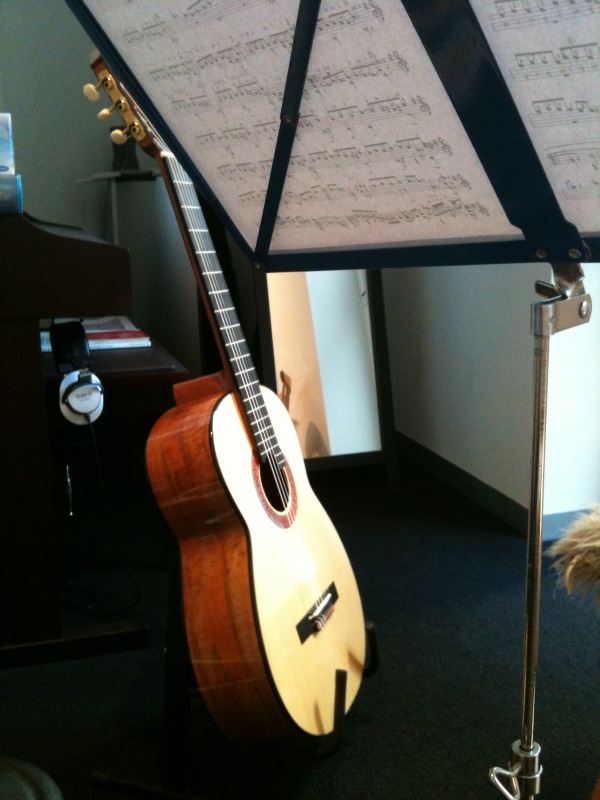
 

The Best Time To Practice Guitar

guitar_photo.jpgIt may sound daft, but I believe there are certain times of the day (for myself at least) that are waaaaaay better for practicing than others. For me a 30 minute or 60 minute period is not equal throughout the day. There are 30 minute or 60 minute “slots” that are worth significantly more in terms of output, results, progress and fruitfulness (call it what you will) than other times of the day.

The following outlines some of my own direct experiences with the best times to practice. I’m not saying that they’re going to be the same for all as we’re all wired differently and some of us are early birds and some night-owls and so on. Have a little read though, soak it in and perhaps use it as a guide to help you figure out the best times for your own practice.

1. 12 – 24 hours after a lesson

Whatever you’re working on with your teacher, and whatever level you’re at, in order to really maximise the time and effort spent in your lessons it’s really a must to sit down with the guitar and have a good practice session recapping things you were working on within 12 to 24 hours of a lesson.  And when I say “good” I’m not necessarily talking about a specific length of time here. I am talking about quality. Make sure you’re really focussed in on the things you were working on in the lesson, almost to the exclusion of everything else.

I’m not so sure about going home and practicing right away after a lesson. You’ve got to give your brain a bit of a break and a chance to assimilate the information you’ve just fed it.

Coming back to the instrument and honing straight in on the things you were working on within 24 hours of your lesson is key – your rested brain will have a reinforced message, you may find things occur more easily as a result of that rest. Importantly, not allowing more than 24 hours slip by between lesson and practice session means that you’ll have a greater chance of remembering things you and your teacher were working on!

If you can’t manage the other ideas here, please please please (please!) do this one!

2. At your peak flow time

For me this is first thing in the morning – for some reason the results yielded from a 45 minute practice session at 6am, seem to be worth at least 90 minutes worth of practice in the evening. That’s not to say that I manage to put in early morning practice most of the week – in fact, due to practical realities for me at the moment it means most of my practice sessions are in the evening at the moment. If, however, I have a particular bugbear with a certain technical element, or something very specific I want to really really focus on, then for me my peak flow time is the early morning.

If you’re a night-owl, however, you might want to try a later evening session and see how that works for you.

3. When you’re sufficiently fueled and rested

There is nothing worse for me than attempting to practice if I’m hungry or tired or both. I find if I’m hungry I really can’t concentrate properly and find myself getting far too easily and quickly frustrated with tricky technical issues – the “han-ger” (the hunger anger!). And if I’m tired then forget it! Sitting down to practice my head feels like it’s made of fluff and cotton wool is, I would say, even  less than a pointless exercise. I think the times I’ve attempted to sit down and practice when I’ve been quite tired (both physically and mentally) I’ve actually made aspects of my playing of a piece worse! If I’m tried I also find physical tension creeps in very easily and my movements are lacking in precision.

So moral of the story is make sure you’ve had a half-decent night’s sleep, or at least a rest, and are not in danger of becoming hungry before settling down to practice. Your brain and fingers will thank you for it, you will progress significantly faster and also (importantly) leave yourself less prone to injury due to unnecessary tension.