New Album Review – Bach on Fire by Lily Afshar

Once again I am in the privileged position as a classical guitar blog writer to receive an advance copy of the latest recording from one of the planet’s finest guitarist. This month it is the latest recording from the wonderful Lily Afshar.

It only seems a moment ago that Lily was releasing her last album with October 2013’s Musica da Camera (which we, of course, featured a review of too. Check it out here.)

Bach On Fire

Bach On Fire (Archer Recordings) is Afshar’s seventh offering and, as the name suggests, takes us through some of J.S. Bach’s most cracking works including Cello Suites, PreludeFugue & AllegroLute Suites and Ave Maria. As Lily so clearly demonstrates through her own personal transcriptions of lute and cello works, Bach certainly indeed was on fire. As is Afshar herself at the moment. Not only is this recording following on only six months (or thereabouts from the previous recording), but all the transcriptions on the album are transcriptions that Lily has made herself – this record should be called Lily on Fire!

Bach on Fire draws its title from these innovative arrangements of Afshar’s. These, according to the woman herself, allow for more interpretive phrasing and dynamic nuance and, ultimately, a more exciting performance. And to be honest this really does come through in the recording. The music, which is music we’re all very familiar with, has a fantastically fresh and vibrant quality to it. That’s no mean feat I can tell you. Kudos to Afshar.

Bach on Fire features:

  • Lute Suite No. 4 in E Major, BWV 1006a
  • Cello Suite No. 1, BWV 1007, 
  • Prelude, Fugue, and Allegro, BWV 998, 
  • Cello Suite No. 3, BWV 1009
  • Ave Maria

My particular favourite on the album is the arrangement of Cello Suite No. 1 (BWV 1007) – the Courante has that sprightly, “running” quality that a courante should have. Lily also manages to really capture the warmth and depth of the cello, with very clear lines (so important in Bach), and making the music sound as if the guitar is its natural home. I must get my hands on a copy of this score.

I must also make mention of Ave Maria too which, for me, is one of those tunes that usually makes me go “ohhh, not again….“. In this instance though, Lily manages to capture and communicate the simple beauty inherent in the music. A simple, unfussy, clear arrangement that, again, sits so very well on the instrument. Listening to this recording makes me feel rather excited and want to play it all for myself! On fire indeed!


Afshar’s new arrangements are the result of many years of experimentation and watching students struggle to play Bach. Knowing that the amount of bass notes and poor fingerings posed a technical challenge for most players, Afshar employed techniques like cross-string fingerings to make the music sound as if it were written for the guitar.

After years of using whiteout, pencil and eraser to adapt other Bach guitar arrangements, I decided to make my own editions from scratch,” she says. Afshar arranged 42 Bach movements which were published by Mel Bay in 2013 as Essential Bach: Arranged for the guitar by Lily Afshar. (Note to self: I must check this out!).

This recording offers a fresh approach to playing Bach,” Afshar writes in the album’s liner notes. “My purpose is to make Bach accessible to a wider audience and encourage guitarists to play them more. Many others have arranged Bach pieces for the guitar, but my arrangements are quite different.”

Whether you’re a lover of classical guitar, Bach, or want to hear what some absolutely top-notch arrangements of some of Bach’s seminal works played by a top-notch guitarist you definitely need to check out Bach on Fire.

Album out June 3 via Archer Records

 

image001

New Album Review: Milos – Aranjuez

You may remember a couple of weeks ago I was getting very excited with the imminent arrival of Milos Karadaglic’s third studio album, AranjuezWell, folks, the eagle has landed!

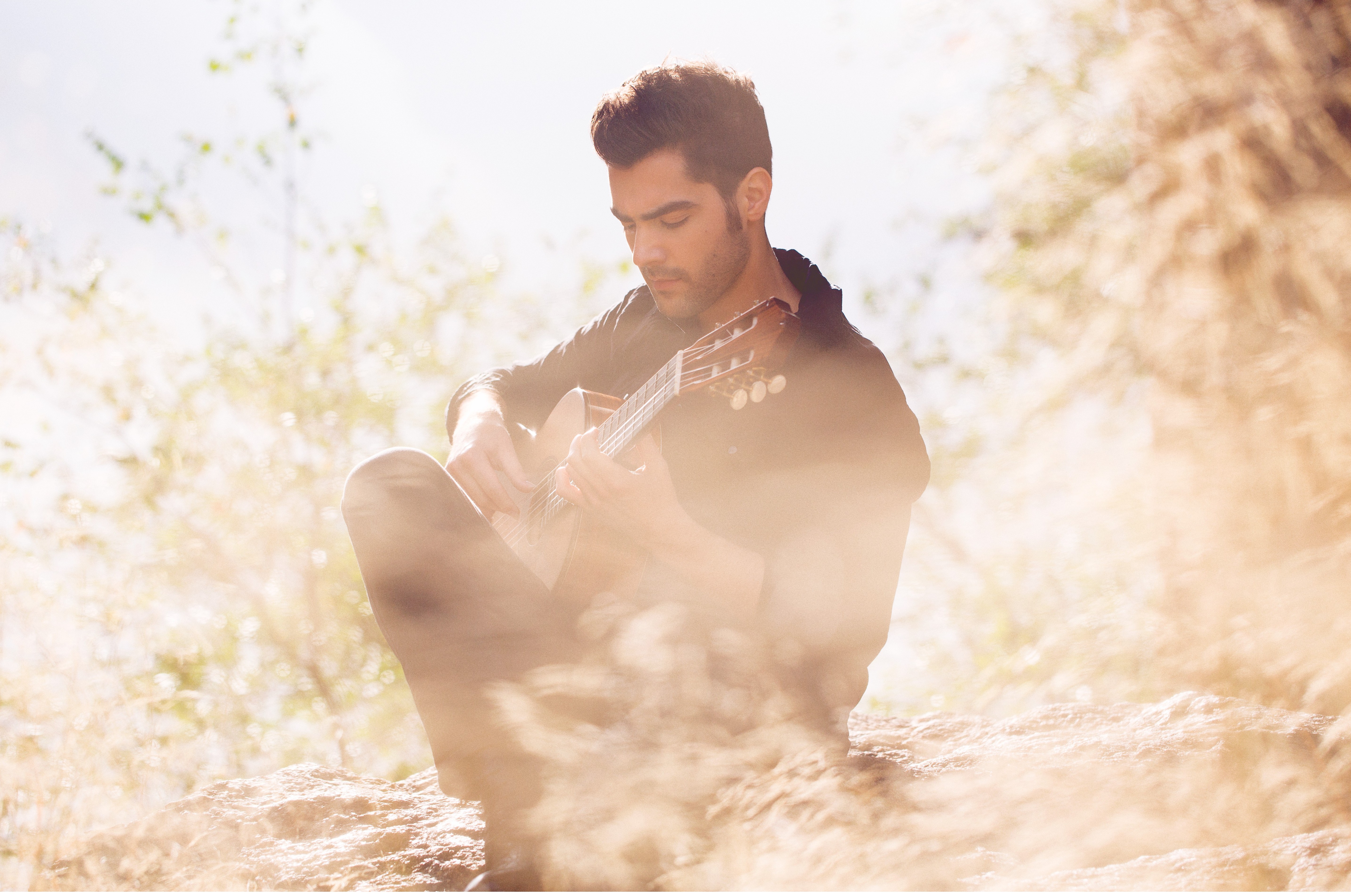
Photo courtesy of Mercury Classics. Copyright Lars Borges / Mercury Classics

For his third album on Mercury Classics/Deutsche Grammophon, Miloš Karadaglić takes the Concierto de Aranjuez as the starting point for a journey across the Spanish landscape, paying tribute to the great music and musicians that placed the modern classical guitar firmly on the international stage.

The album hit the shops (high street and digital varieties) on Monday this week (17th February) and the lovely people at Mercury Music were kind enough to send me an advance copy though so I could get my listening gear around it and give you a bit of a synopsis of what you’re in for when you head to the shops, or iTunes or wherever to get yourself a copy (because I promise you that you’ll want a copy).

Here’s the track list for you:

Joaquín Rodrigo: Concierto de Aranjuez

01. Allegro con spirito 05:58

02. Adagio 10:52

03. Allegro gentile 04:42

Manuel De Falla

04. Homenaje pour le Tombeau de Claude Debussy 03:52

05. Danza del Molinero (“El Sombrero de Tres Picos”) 03:02

Joaquín Rodrigo

06. Invocación y danza 09:14

Joaquín Rodrigo: Fantasía para un gentilhombre

07. Villano y Ricercare 05:07

08. Españoleta y Fanfare de la Caballería de Nápoles 10:20

09. Danza de las hachas 02:01

10. Canario 04:58

As the name of the album suggests, the headline piece presented on the album is Rodrigo’s masterpiece the Concierto de Aranjuez. I was impressed by the little tid-bits of the Concierto released on YouTube in the lead up to album launch and I can say unequivocally that I wasn’t disappointed. This is most certainly a key piece within the classical guitar repertoire and probably a concerto that any professional guitarist worth his or her salt would want to tackle.

Well, Milos does significantly more than tackle the Aranjuez. I don’t think it would be going too far to say that he has mastered it. The second movement, the Adagio, in particular is stunning. My favourite of the three movements and potentially my favourite on the whole album. It’s a well-worn and well-trodden path that Milos treads with this concerto and the second movement is so well known too, but he (and the London Philharmonic Orchestra) play it with a beautiful sense of gravitas, with none of that sense of schmalz which can sometimes creep into this movement.

Milos’ tone production is just fabulous in this movement too, as it is throughout the whole album (and well captured in the production). I particularly love the moment around 7:35 into the Adagio, he plays with the most sumptuous, bassoony tone. Rich and velvety. This is inspirational stuff. This is the kind of tone one should be seeking. Its the kind of thing I’m always striving for in my playing anyway, to always produce that deep rich, cello-esque tone. I urge you to listen and absorb.

Photo courtesy of Mercury Classics. Copyright Lars Borges / Mercury Classics

And the strumming section that follows,  building through a great crescendo to the 8:13 mark, is tastefully executed too,. Not all guns blazing, lets go crazy, but subtly powerful.

I think Milos is starting to come of age as a musician with this album. it’s a very grown-up sounding album, awesome playing both technically and musically without being flashy, musically informed interplay between the orchestra and Milos the soloist, subtle in its approach and styling. Beautiful tone and exquisite attention to detail in the phrasing (in both the orchestra as well as Milos himself). A mature and elegant recording if ever there was one.

I think I might even go so far as to say that I think this might be up there now in my favourite renditions of the Concierto. And please understand, that’s not something I say lightly!

Following the Aranjuez is the de Falla Homanaje (one of my favourite pieces in the classical guitar repertoire), which is just divine. It has a really rich, sultry quality to it that I just love. Man, those basses on that Smallman are so big, fat and juicy (of course, aided just a little bit by the man playing them!).

Milos’ approach to the Danza del Molinero has that fantastically masculine, Iberian sensibility about it, particularly the opening section. His big, fat broad rasguedos completed just nicely with dolce but not overly saccharine melodic sections. Nice. Very nice. This track has had quite a few plays already. A highlight for me on this album. Up there, contending with the Adagio from the Concierto de Aranjuez as my favourite track. Just love playing that intro section over and over…..

Rodrigo’s Homanaje de Manuel de Falla Invocacion y Danza is also artfully represented here by Milos. Again the sections where a guitarist could go completely nuts (i.e. around the 7min 39 sec and 8 min 37 sec marks), Milos just holds enough back for this to be a very elegant, subtle and enchanting interpretation.

And what can I say about the final suite on the album, Rodrigo’s concerto for guitar and orchestra Fantasia Para Un Gentilhombre? Well, I’m running out of superlatives! With completely the running the risk of sounding overly gushing and also repeating myself, the tone Milos produces in all movements of this suite is absolutely top drawer stuff. My particular favourite movement is the second movement, Españoleta y Fanfare de la Caballería de Nápoles, where Milos explore just a great range of colours on the guitar and plays just superbly with the orchestra (the marvellous London Philharmonic Orchestra).

For all guitarists, guitar aficionados and classical music lovers alike, this album from Milos is a must. With this album we are witnessing a fantastic talent blossoming into a true artist.

Beguiling. Powerful. Elegant.

Photo courtesy of Mercury Classics. Copyright Lars Borges / Mercury Classics