
We Melbournians were treated to two performances by the wonderfully talented Xuefei Yang, along with the Melbourne Symphony Orchestra, last week. I headed along to the first of the two concerts on the 2nd October, very excited to hear and see not only Yang’s live interpretation of Rodrigo’s Concierto de Aranjuez as part of her Australian debut, but also the Australian premier of Tan Dan’s Concerto for Guitar and Orchestra (Y 2). I was not disappointed.
The near sell-out audience was treated initially to the MSO playing Debussy’s Prelude a l‘Apres-Midi d’un Faune, a gorgeous piece, sumptuously played by the orchestra. All shimmering strings and harp, rich warm brass and iridescent flute in its Impressionism, sliding us into the evening.
After that delicious introduction we were in for something a little different to follow – and here I really take my hat off both to the Melbourne Symphony Orchestra and Xuefei Yang. It’s very easy, I think, to keep pumping out the Aranjuez (as beautiful and as marvellous a piece of music as it). It takes the courage of one’s convictions, however, to also introduce to what is probably a relatively conservative audience (the general populace who want to hear the gorgeous Debussy tunes that top and tailed this concert and of course the Aranjuez) to a brand new work. And what a work! Bravo – good choice MSO and Xuefei!
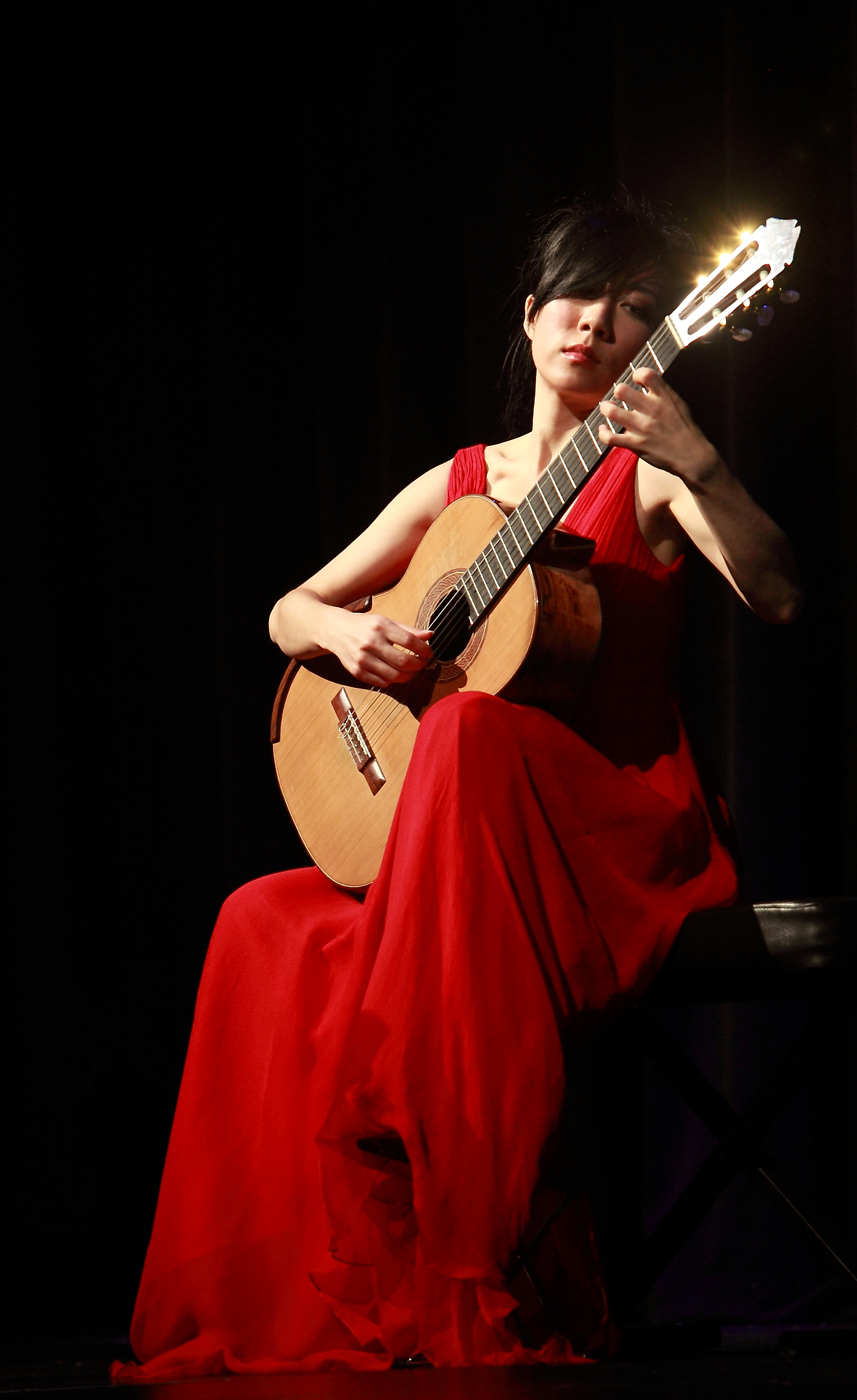
Yes, Tan Dun’s Concerto for Guitar and Orchestra (Yi 2) is not a piece for the faint-hearted – audience, orchestra or guitar soloist! The orchestra are asked to vocalise in one section, the woodwinds take out their reeds and blow through them, the brass blow air through their instruments, glass bottles at used to play the strings inside the piano (to great effect underscoring some deep punching double bass playing), percussionists dip gongs into water to change their pitch. Put into words like that it sounds like rather a mish-mash of ideas and concepts, and perhaps to the untrained ear it may sound like that (my other half wasn’t really that fussed with it). However, if you’re prepared to do a little work as the listener to this kind of contemporary music you may find it challenging in a positive manner, very exciting and highly rewarding (well, I certainly did). Yi2 is definitely one of those pieces a bit like Vegemite (or Marmite) – you either love it, or you hate it. There’s no in between!
Yi2 is also a highly inventive, and technical tour de force for the guitarist. Xuefei performed the solo part with consummate ease, utilising various techniques including rhythmic percussive techniques (aided by the conductor) and crossed strings (to represent the sound of the Chinese pipa). Xuefei demonstrated real mastery in the delivery of this performance (and remaining cool, calm and collected in the face of out of tune G and B strings, re tuning at opportune moments). I found she really brought out the two key influences on this piece – traditional Chinese and traditional Spanish musics.
Then following the intermission we moved onto the Aranjuez. What can I say?!
This is a piece that Xuefei clearly knows extremely well, delivering such sensitively timed rubarto and supreme sense of musicality with a panache that can only come with such in depth knowledge of a piece. Have no doubt about it, this was large concert hall classical guitar playing of the highest order. Commanding, confident and masterful, yet utterly expressive and emotive playing that makes the hair on the back of your neck stand up. Witnessing this performance of the Aranjuez it was easy to understand why Xuefei Yang has earned the reputation as one of the top classical guitarists actively performing today. Bravissima!
Watch this space for a review of Xuefei’s solo recital in Geelong next week.


 Classical Guitar n Stuff