Practice time!

So how do you set out your practice time?
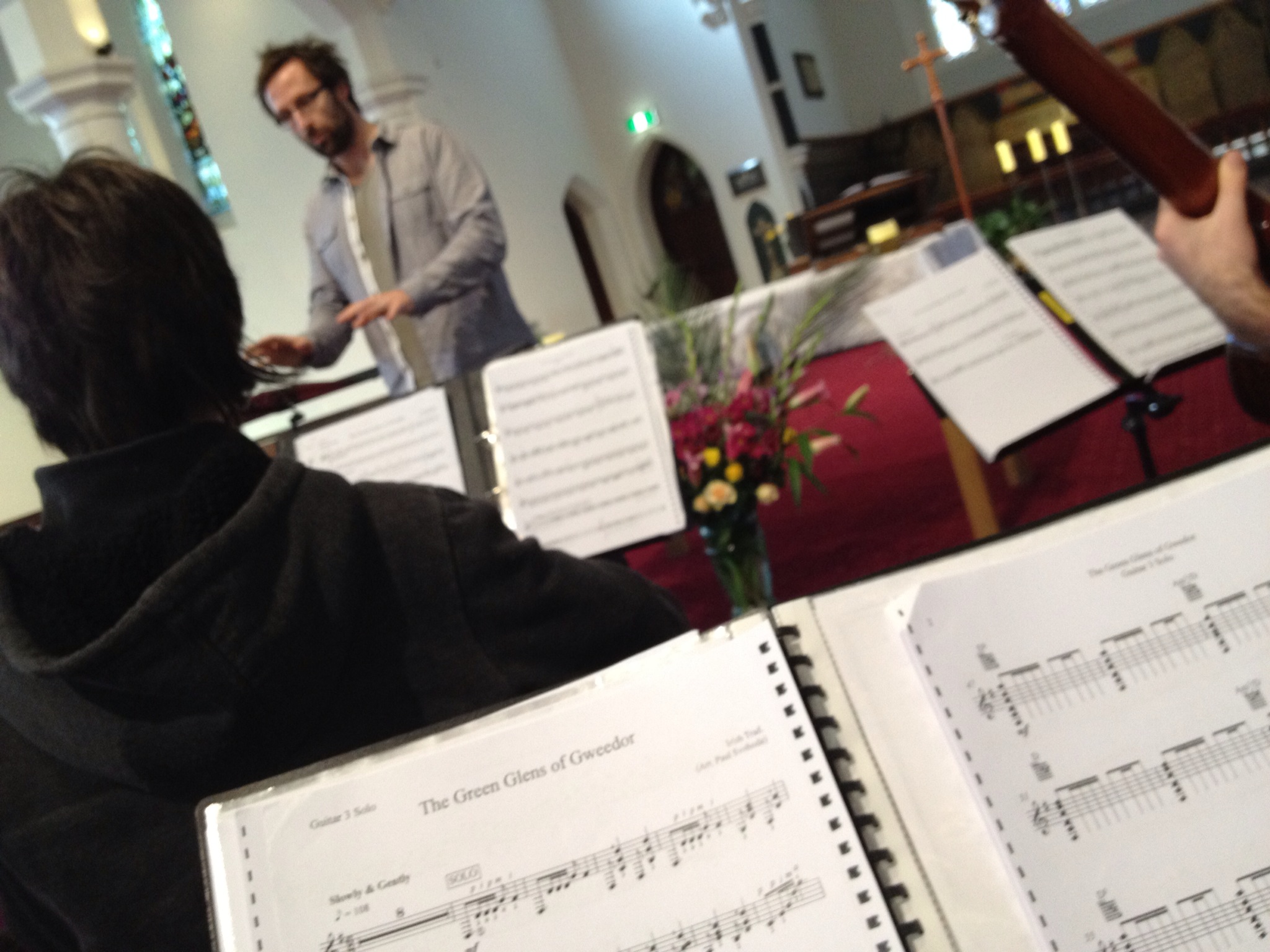
Do you have a set routine that you always stick to?

That’s pretty good if you do. If you can get a habit formed in terms of a regular practice time and practice style then you’re setting yourself up well for some awesome productive practice. I hear it takes around 11-12 weeks of continuous practice for a habit to become ingrained. So if you’re not practicing regularly, but you want to start getting the habit of it built-in set a reminder on your desktop calendar or on your phone that tells you it’s time for practice!

And don’t beat yourself up if you’re not able to do it every single day (in fact I’d say giving yourself one day off out of seven is probably healthy). Just aim to practice most days out of seven in the week, even if it’s just 10 minutes. Something is better than nothing at all, and it is from these little baby steps that we gradually build up our practice, working with our natural abilities to become competent guitarists and fantastic musicians. One step at a time. And remember, if it takes around 11-12 weeks to build in a habit, it’s going to take you around three months to get that habit truly ingrained.

Set yourself a goal

If you’ve not got a regular practice time or practice schedule booked into the brain, set yourself a goal from now.

Right. If we’re in mid-September now, that takes 12 weeks out to around mid to end of November.

As well as that reminder in your phone, post in stopping points every four weeks to ask yourself where are you in terms of your daily or regular practice? Is it feeling ingrained? Is it working? Do you need to change something? Is there a better, easier or more productive time of day for you to practice?

Rinse and repeat – to a point..

I also hear that  it takes our brains around 20 or days to learn new patterns – so don’t be stressing if you can’t get that chord change or finger movement yet or a piece memorised after a couple of days.

Do pick out a tricky spot from the music – you know, that little bugger of a finger twister, that funny little run, that “thing” in bar 12 or whatever – and work it through slowly methodically. Pick it apart. Find out EXACTLY what is going wrong, or rather what is not quite working right and what you need to do with your left hand fingers AND your right hand fingers to get it working as you want it to sound. Back it up a mo – just checking, you do know how you want it to sound right? Good, because that’s half the battle in getting to work. Know exactly what you want, and then it’s just a case of working on some of the mechanics for your fingers to deliver that for you.

Yes, do pick out that tricky spot, but DO NOT go repeating it countless times. If it’s still not working go back to figuring out what you need to do to fix it up. And if you’re not sure what that is then it’s definitely one that your teacher will be able to help you with!

So, yes repeat it a few times when you’ve got it more or less figured out. Do this S-L-O-W-L-Y. Don’t be in too much of a rush to get it up to speed just yet. There’s plenty of time for that. Just focus on getting it right, getting it settled, getting it sounding exactly how you want. Speed comes later, and only ever to serve the music.

And then leave it to sink in for a while. You might want to come back to it later in your practice session. You definitely want to pick out that little tricky spot in your next practice session. I can pretty much guarantee it will be a lot less tricky the next day and the next, until you will have forgotten what all the fuss was about!

Approaching a new classical guitar piece – A closer look at style

Pinch, punch first of the month!

Gibson Classic
Photo credit: Lamerie

As I’m sure you, my learned readers, are more than well aware the classical guitar repertoire runs the full gamut of styles – baroque to blues, minuet to maxixe, classical period to contemporary and everything in-between. OK, not all of it may have been directly written for our instrument for one reason or another, but you get the idea. Plenty to pick from and lots of styles!

As such, when learning a classical guitar piece it can help us to remember this and reflect mindfully on the style of the piece we’re getting to grips with.

We may use the same or very similar techniques whichever piece we’re playing. The approach, however, the feel, the vibe of it (to misquote The Castle – look it up non-Aussies it’s a crackup… Anyway, I digress as per usual…), the intention of the music itself varies considerably depending on what we’re playing. This is one of the reasons why, for example, that examination boards ask candidates to play three or four pieces from different eras or styles – to see how you respond to changes in approach and style, testing out your versatility as a player and see if you can get under the skin of the music and convey the intention of differing styles.

I find that when learning a new piece, taking a few moments to look at its style and it’s impulsion, can help in getting to grips with it much faster. It’s not a magical method that will have you dashing off a brilliant barcarolle or stunning sarabande in five minutes of looking at the music (well, then again it might! I’ve not heard you play!). It will, however, provided you with some good sturdy starting points of a foundation from which to build an edifice of musical awesomeness.

You don’t generally start out on a journey (usually) without some idea of how you’re going to arrive at your destination do you? Doing a bit of research into the style of music you’re learning can act a bit like your roadmap, guidebook and phrasebook all in one, guiding you to the precise musical destination that you intended and helping with those idiomatic local expressions along the way.

How do I do this?

My first tip would be to take a close look at the title of the piece.

  • Is it something quite formal? Is it of a particular era?
  • For example, is it say a gigue or a sarabande, or perhaps some other stylised dance form, typical of the Baroque era? Each movement in a Baroque suite has its own particular idiosyncrasies and feel.
  • What else does the title convey? This question is more appropriate  if the piece in question is written in perhaps a less formalist style.
  • Is the piece intended to reflect a certain place, region or country? If so, have a think about the style and musical approach intended or that may work best to invoke that musical imagery.Is this piece influenced by folk styles? Examples might be such as a choro, fado or tango. When approaching some of these styles be sure to do a wee bit of homework around them as there can be styles within styles within styles!
Baroque guitar made by Tielke
Baroque guitar made by Tielke (Photo credit: D W S)

This process is where Google and YouTube can come in very handy. What did we do before their time?! Pray and hope that the Dewey Decimal system would lead us to the right spot in the library and that there might be something there awaiting the light of day?! Agreed, Google and YouTube are perhaps not very scholarly approaches to research, but they are undeniably more than a great starting place, particularly for listening to and watching new or musical styles previously unknown to oneself. Brill!

Here you go, case in point – a video for you today on the history of fado:

http://www.youtube.com/watch?v=on9lKHZc5jA

Obviously, there are more styles than I could go into one blog post, or you’d be here reading until August 2013 (or you’d probably just switch off)! So today’s key take away message is to get some background on the piece you’re learning. If you understand even a little of where it is coming from, you can then build on that to take it forwards with greater direction and depth to its intended destination.

If you’d like me to go into more depth on anything else style related, just drop me a comment in the box below and I’ll be happy to help.